


Tools & Resources
My intention with this page is to offer a little support as you explore ways to feel more grounded and deepen your understanding of your own experiences. I’ve gathered three gentle coping tools and a list of suggested books that connect with the approaches I use in my practice. I may add more resources over time.
You’re welcome to explore what feels helpful, move at your own pace, and leave what doesn’t resonate. If we’re working together, we can also make space for any questions or reflections that come up along the way.
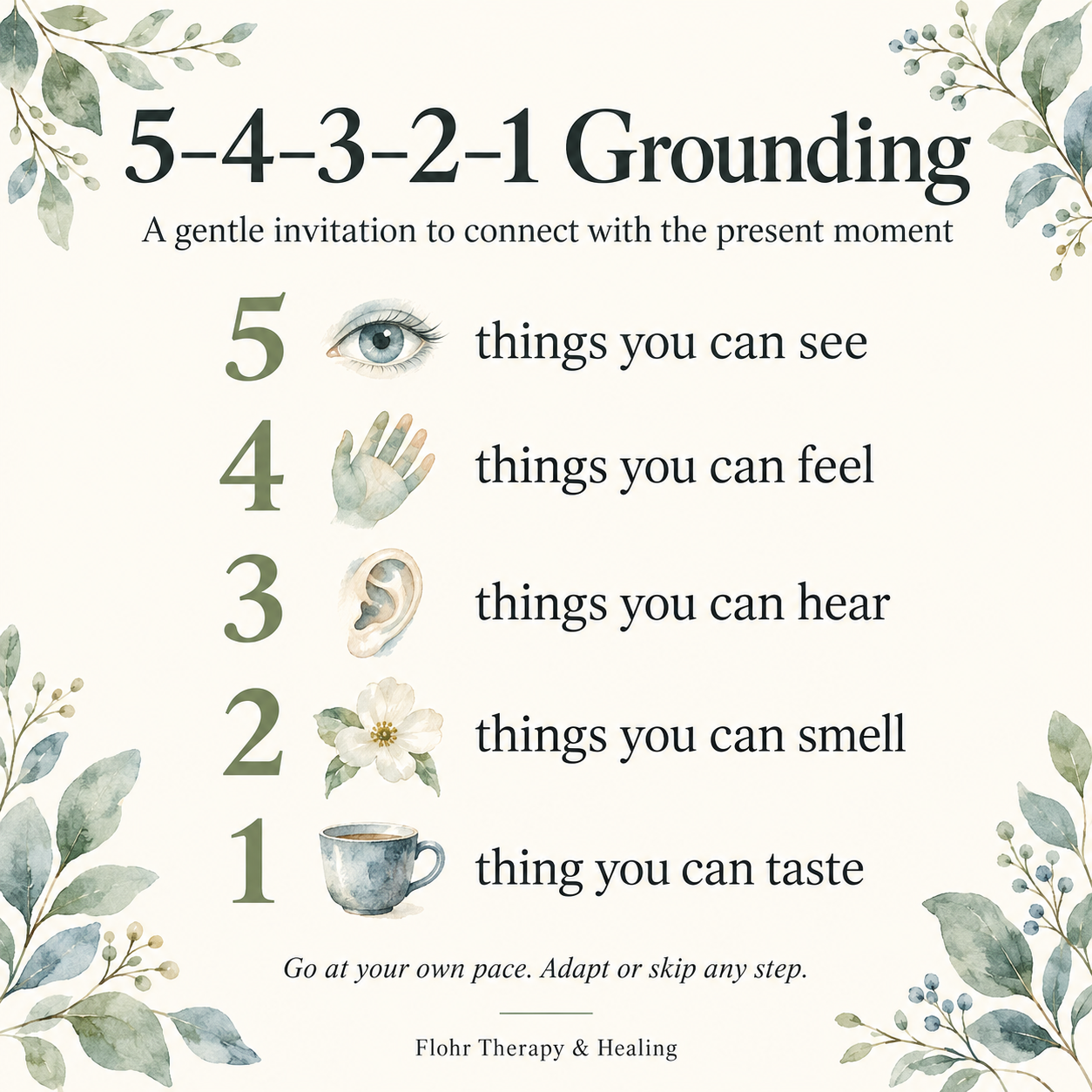
5–4–3–2–1 Grounding Exercise
When you feel overwhelmed or caught up in your thoughts, gently noticing your surroundings may help you reconnect with the present moment. This exercise invites you to notice five things you can see, four things you can feel, such as your feet on the floor or the texture of your clothing, three things you can hear, two things you can smell, and one thing you can taste.
There is no need to rush or do it perfectly. You’re welcome to adapt or skip any step, and pause if it feels uncomfortable.
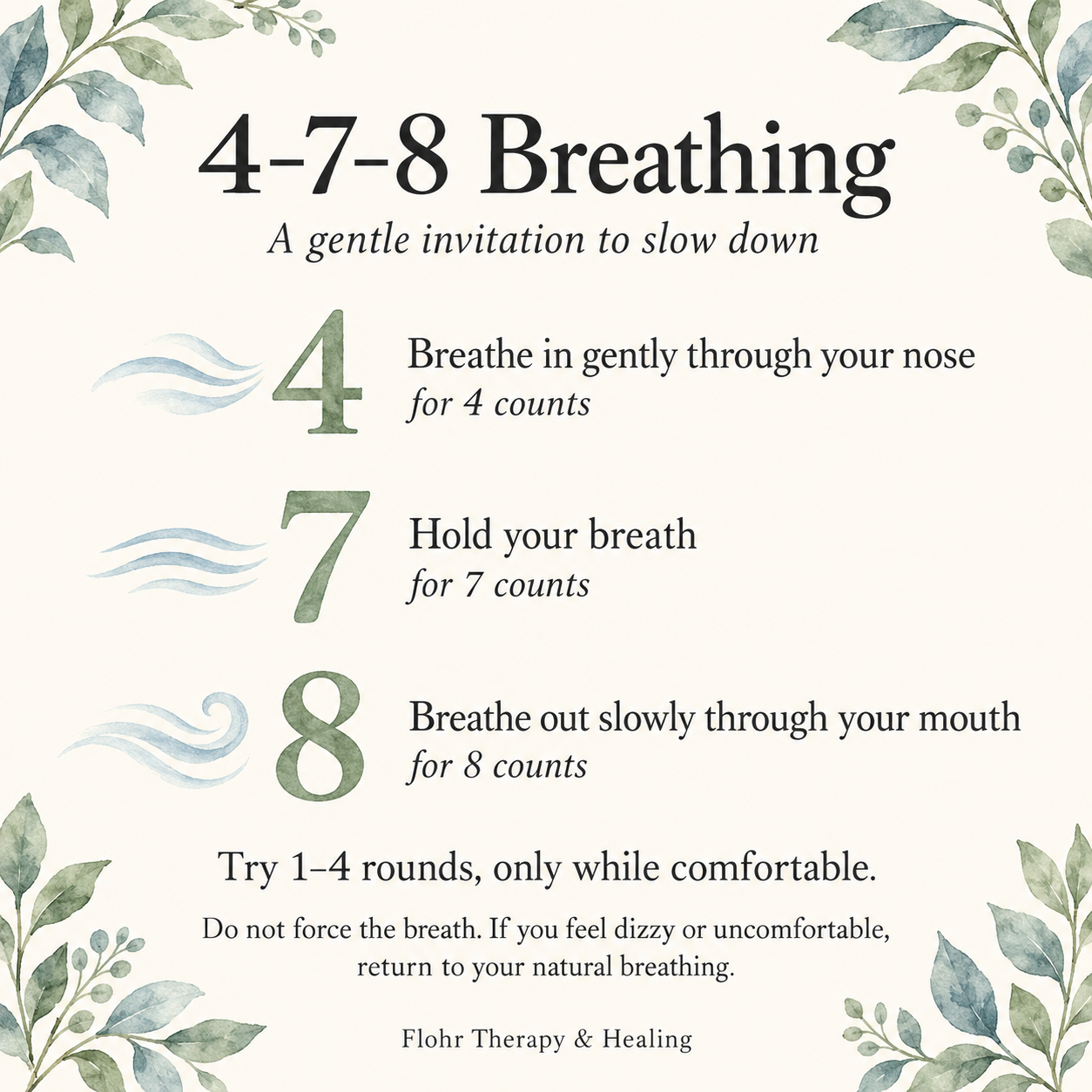
4–7–8 Breathing
This breathing practice may help you slow down and create a moment of calm. Find a comfortable seat, gently breathe out, then inhale through your nose for four counts, hold for seven, and slowly exhale through your mouth for eight. Try one to four rounds, only while comfortable.
There is no need to force the breath. If holding feels difficult, you’re welcome to skip the hold and breathe naturally. If you feel dizzy or uncomfortable, stop and return to your natural breathing.
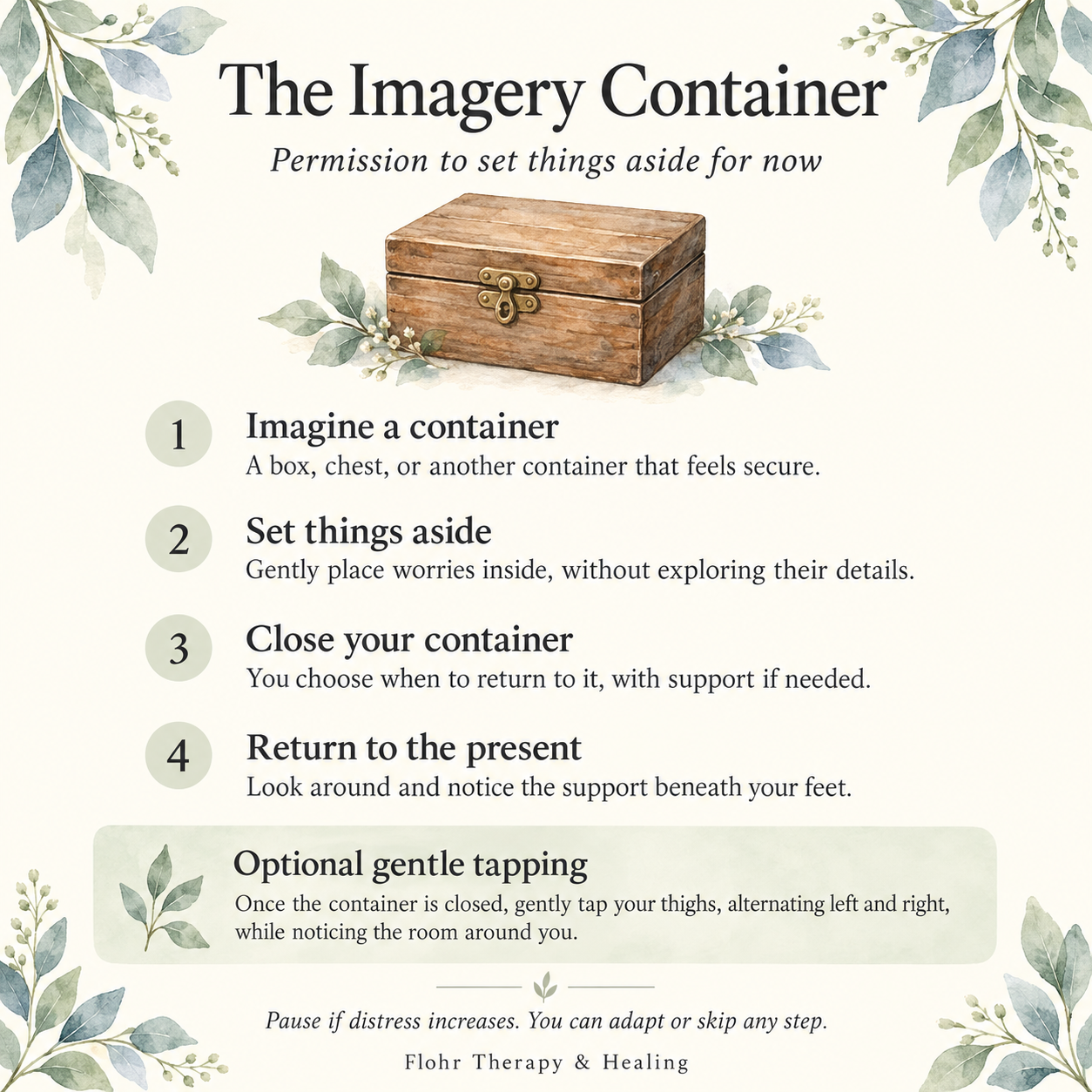
The Imagery Container Exercise
Sometimes we need permission to set things aside for a while. Imagine a container that feels secure—a box, chest, or something entirely your own. Gently imagine placing worries or difficult feelings inside, without exploring their details, then close it. You can return to them when you feel ready, with support if needed.
You’re welcome to add slow, gentle bilateral tapping: tap your thighs with your hands, alternating left and right, while noticing the room around you. Try a few taps, pause, and notice how you feel.
This is a temporary resting place for what needs your attention. If imagery or tapping increases distress, stop and reconnect with your surroundings.

Suggested Reading
These books offer different perspectives on trauma, emotions, relationships, and healing. Some introduce approaches that inform my work, while others may help you put words to your own experiences. You’re welcome to explore what resonates with you, there is no expectation to read them all.
Some include descriptions of trauma or abuse. Read at your own pace, pause when needed, and feel free to bring any questions or reactions into our sessions.
Trauma & the Nervous System
The Body Keeps the Score
Bessel van der Kolk
Explores how trauma can affect the mind, body, and sense of connection, along with different approaches to healing. This may interest you if you want a broader understanding of trauma and its effects. It includes detailed accounts of traumatic experiences.
Waking the Tiger: Healing Trauma
Peter Levine
Offers a body-based perspective on trauma and introduces ideas that inform Somatic Experiencing. This may interest you if you’re curious about survival responses and the role of bodily awareness in healing.
Anchored
Deb Dana
Introduces a polyvagal perspective on the nervous system, with practices for noticing your responses and exploring what helps you feel supported and connected. This may interest you if you want to better understand shifts between feeling settled, activated, or shut down.
Parts, Emotional Needs & Relationships
No Bad Parts
Richard Schwartz
Introduces Internal Family Systems (IFS), a compassionate approach to understanding the different parts of ourselves. This may resonate if you notice inner conflict, self-criticism, or protective responses and want to meet them with more curiosity.
Running on Empty
Jonice Webb
Explores childhood emotional neglect, including the impact of emotional support that may have been missing. This may resonate if you have difficulty identifying your feelings, expressing your needs, or understanding why you feel disconnected.
The Power of Attachment
Diane Poole Heller
Explores how early relationships can shape patterns of closeness, trust, and connection in adulthood. This may interest you if you want to understand your relationship patterns and explore the possibility of more secure connection.
Understanding Abuse & Control
Why Does He Do That?
Lundy Bancroft
Explores patterns of abusive and controlling behavior, offering language for experiences that can feel confusing or difficult to name. The book focuses on male perpetrators; abuse can occur across genders and relationship types.
** These resources are offered for education and reflection and are not a substitute for individualized therapy.